Barge insurance isn’t just about protecting the vessel itself, but about managing risks arising from geographical conditions and the vessel’s own technical limitations.
1. Sinking & Capsizing Risks
Barges are flat-bottomed and have relatively low freeboard. When carrying heavy cargo such as sand or coal, sudden storms or uneven weight distribution during loading (loading error) can easily cause them to sink or capsize compared to larger ocean-going vessels. Insurance helps cover both the hull and the high cost of salvage.
2. River Navigation Risks
River navigation has its own unique risks, such as:
- Strong currents: Especially during the rainy season, which can cause barges to lose balance.
- Collision with bridge piers: One of the most common accidents, which can lead to damage to public structures.
- Runaway: During the dry season when water levels are low. Insurance will cover the cost of damage from collisions or hull punctures.
3. Third-Party Liability
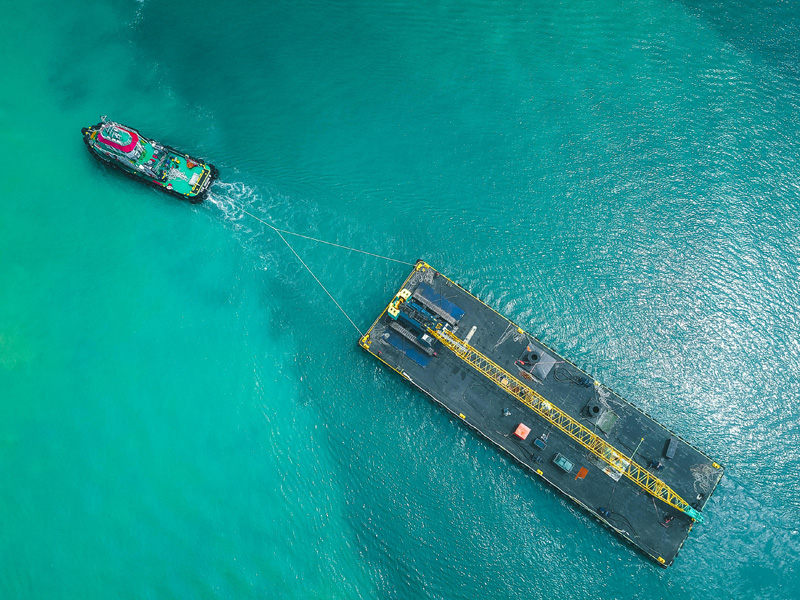
Since barges must be towed, if the tow line breaks or the barge loses control and collides with another vessel, dock, or waterfront property, the barge owner is jointly liable. Liability insurance will help pay for these claims on your behalf.
4. Towing Risks
The safety of a barge is tied to the efficiency of the tugboat. If the tugboat’s engine fails in strong currents, the barge immediately becomes a large, unstable object. Towing coverage insurance is therefore a very important condition.
Who should have this type of insurance?
- Ship Owners: To protect their property (the hull) and salvage costs.
- Charter(s): (Charterer): To protect against contractual liability if you damage another’s vessel.
- Cargo Owner: Even if the vessel itself is insured, insuring the cargo (Marine Cargo) alongside it ensures that if the vessel sinks, your cargo will be fully compensated.
A barge may not have its own engine, but the responsibility of its owner is driven by an enormous value.